
Lee Sheriff Custody Scope
The Lee County Sheriff’s Office is a county law-enforcement agency, not the county’s verified long-term detention facility. Deputies may make an arrest, serve a warrant, write the incident report, and transport the person. The Sumter-Lee Regional Detention Center usually handles the continuing jail booking for Lee local detainees. That regional arrangement is the central fact behind any release search.
A brief hold at the Sheriff’s Office can end with a citation, court appearance, transfer to the regional center, or delivery to another authorized custodian. The arrest record may show who acted and why. It may not contain the regional jail’s exact admission and release timestamps. Ask each office only for the record it created.
| Question | Likely custodian |
|---|---|
| Who made the arrest? | Lee County Sheriff’s Office |
| When did regional jail custody end? | Sumter-Lee Regional Detention Center |
| What did the judge order? | Lee court or Clerk |
| Was the person sent to state prison? | SCDC |
| Is community supervision active? | SCDPPPS |
Confirm Lee Sheriff Release
Begin with the Sheriff’s incident or arrest identifiers when available. Then search the regional current portal under the person’s exact name. A current card supports detention at that source’s update point. No card does not prove release. The person may have been transferred, the spelling may differ, or the booking may have ended for one of several reasons.
- Confirm that the Sheriff was the arresting agency and note the incident, warrant, or case number.
- Search the Sumter-Lee current portal and SC VINE for the participating jail record.
- Call the regional detention center at 803-436-2340 and ask whether the booking ended in release or transfer.
- Read the Lee court case for bond, disposition, sentence, or a later warrant.
- Follow any SCDC, federal, immigration, or other-county destination named in the release entry.
The Lee County released inmate search explains how those layers fit together. The strongest practical confirmation is the regional release entry with its timestamp, reason, and destination, paired with a receiving-system check when custody continued.
Lee Sheriff Arrest Records
Request Sheriff-created material from the Lee County Sheriff’s Office. A focused request may seek the incident report, arrest report, warrant-related public material, transport record, and identifiers that connect the arrest to a regional booking. Give the full name, date of birth if known, approximate event date, location, and any incident or case number. Ask for electronic copies and segregable nonexempt portions.
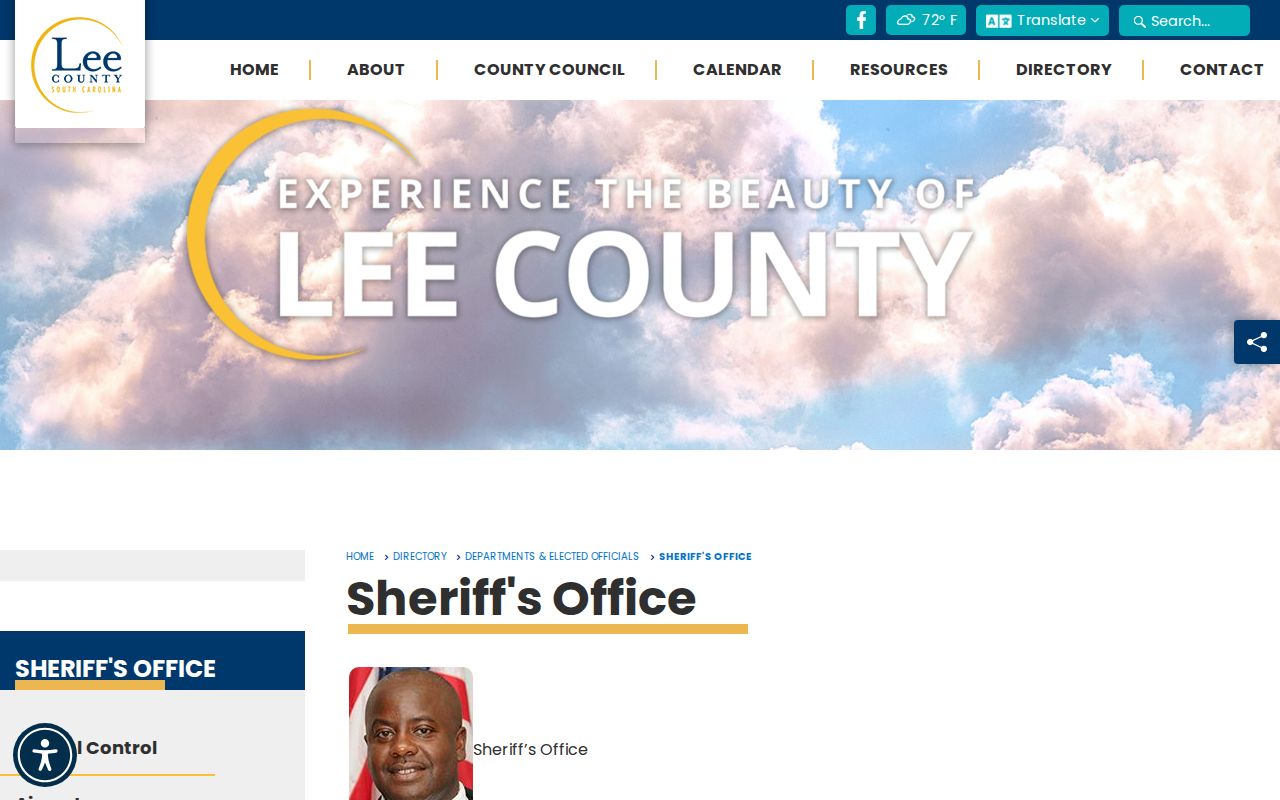
The official Sheriff page names the agency and supplies its main contact. The Lee County Sheriff’s Office page is the right place to confirm current routing before submitting a request.
Do not ask the Sheriff to certify fields created by the Sumter jail system. Send a separate bounded request to the regional operator for booking time, actual release time, release type, recorded holds, receiving agency, and booking photograph.
Lee Sheriff Contact Route
The Sheriff’s Office is at 113 Gregg Street in Bishopville. The county page gives a postal box, while the Sheriffs’ Association directory also identifies the street location and directs detention calls to Sumter. No supported public-counter or records hours were found. Call before an in-person visit and ask for the current FOIA route and posted fee schedule.
Lee County Sheriff’s Office
113 Gregg Street
Bishopville, SC 29010
Mail: P.O. Box 89
803-484-5353
Fax: 803-484-5794
Verify records hours by phone.
South Carolina FOIA permits inspection and copying of public records subject to exemptions. The office may redact protected personal, investigative, security, juvenile, or sealed information. Ask for the legal basis when material is withheld and request the releasable remainder. No verified Lee Sheriff per-page rate was found, so obtain an itemized estimate.
- Arrest record
- Agency documentation of taking a person into custody.
- Booking record
- The detention custodian’s intake record.
- Release record
- The custody-ending event with time, type, and possible destination.
- Disposition
- The court’s resolution of a charge, not the exact jail exit time.
Lee Official Records Portal
Lee County also provides an online official-records document portal. It is not the criminal Public Index and it is not an inmate locator. Its presence can confuse a searcher because “official records” sounds broad. Use it for the county document collections it actually indexes, not as proof of arrest, release, or court disposition.
The Lee County official-records portal identifies its own searchable document system.
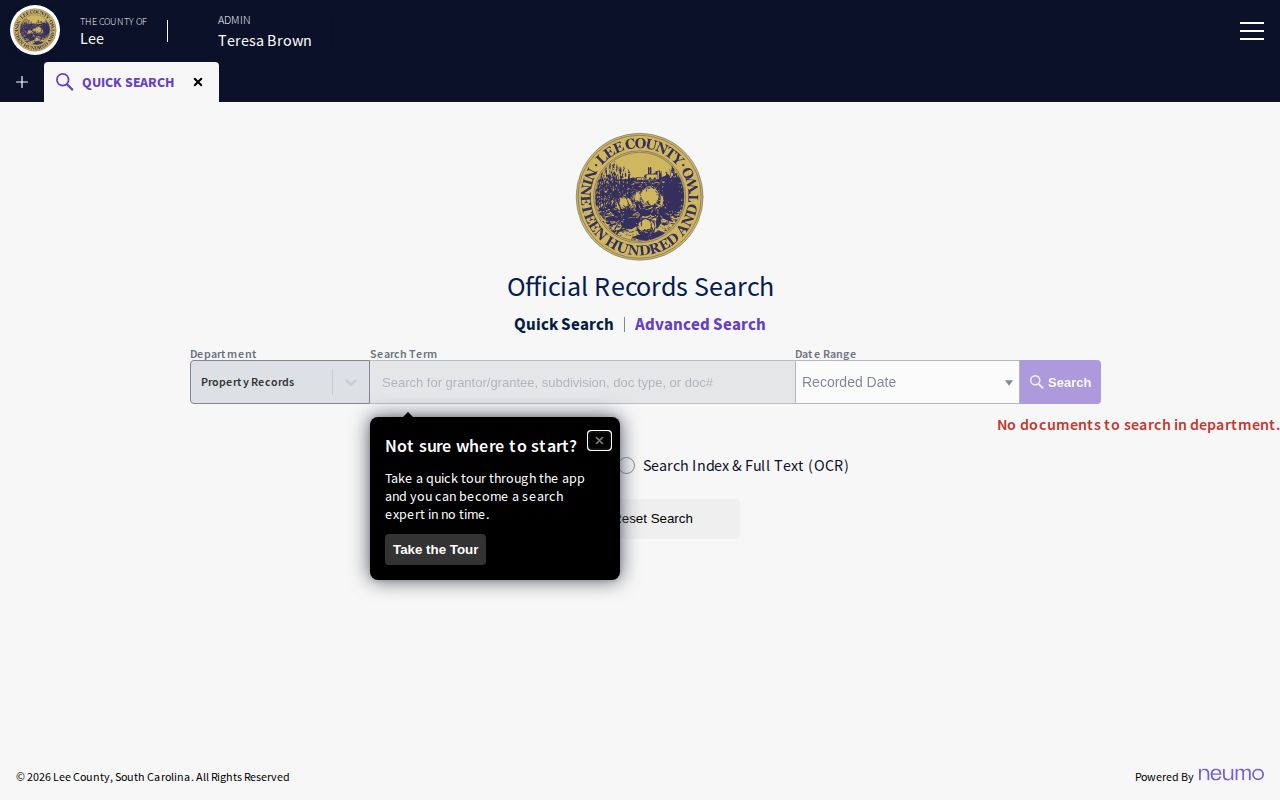
For a criminal case, use the Lee Public Index or the proper Clerk, Magistrate, Bond Court, or municipal office. For physical jail release, use the regional detention center. Keeping these databases separate prevents a no-result in one narrow source from becoming a false claim about custody.
Lee Court Release Evidence
Lee General Sessions records can include warrants, bond paperwork, motions, and sentencing sheets. The Public Index can show docket events, charges, disposition, and sentence information. A bond order authorizes release under stated terms, but processing and other holds can delay departure. A disposed charge can coexist with detention on another case.
Clerk fees found in the research were fifty cents per page with a one-dollar minimum, one dollar for certification, and two dollars for an in-person statement of matters filed. Those are court fees. They must not be presented as Sheriff or regional jail fees. Clerk staff also state that they do not perform broad “record checks,” so request a known case document rather than an open-ended search.
Read the entire chronology. A suspended term, probation order, concurrent or consecutive sentence, time-served credit, appeal, or later warrant changes the meaning. The court record explains legal authority, while the jail record supplies actual physical release.
After a Sheriff Transfer
A Sheriff transport to Sumter starts the regional-jail phase. A later bond or time-served release may return the person to the community subject to court terms. Transfer to SCDC begins state-prison custody. Transfer to another jail, USMS, or ICE also keeps custody in force. Ask for the destination rather than accepting the word “released” without an agency qualifier.
| Destination | Confirmation route |
|---|---|
| Community after bond | Regional release entry plus bond order |
| SCDC | SCDC current search, later released search |
| Another county | Receiving jail record |
| USMS or BOP | Federal docket, USMS, BOP locator |
| ICE | ODLS and responsible ERO office |
SC VINE can help bridge participating county detention, SCDC, and SCDPPPS records. Re-registration may be needed after an agency transfer. For an exact historic event, obtain the responsible custodian’s record.
Lee Sheriff Record Boundaries
A Sheriff record can be accurate while saying nothing about later jail release. The regional booking can be accurate while omitting the full court history. The court docket can be accurate while not showing the door time. Each source has a defined scope. Match the claim to that scope and state the observation date.
Never infer guilt from an arrest or booking image. Dismissal, acquittal, conviction, sealing, and expungement are separate legal events. If a public record has been sealed or removed under law, do not fill the gap with stale copies. Ask the originating office about correction procedures when identifiers or status appear wrong.
The best final statement is narrow: the Sheriff made the arrest, the regional jail recorded a named custody-ending event, and the court or receiving agency confirms what followed. That chain answers where the person went without overstating any one record.
Lee Sheriff App Limits
Lee County has an official Sheriff’s Office-SC mobile app, but the reviewed store description does not advertise an inmate lookup, recent-release list, or mugshot module. Its listed functions include agency alerts, anonymous tips, department and career information, weather, a calendar, and links to the agency website and Facebook. The app can help a reader follow Sheriff announcements. It should not be labeled as the county’s jail database.
This limit matters because Lee detainees are held through the regional center. A Sheriff alert about an arrest does not show the later Sumter booking outcome. An app notification may remain visible after the regional roster changes, and neither item supplies the exact release reason or destination. For those fields, contact the regional detention custodian and request the booking-and-release entry.
Recheck the current app description before claiming a new feature, since software can change. If a later version adds an inmate function, record its live fields and update date before relying on it. Until then, use the app for communications only. The same source rule applies to the standalone Sheriff domain noted during research: it was a parked hosting page at review, so the official Lee County page and Sheriffs’ Association directory are the supported contact sources.
Public Record Search
Sponsored Results