
ICE Release and Handoff
A Lee County local detainee is generally held through Sumter-Lee Regional Detention Center. If that record says “released to ICE” or names an immigration authority as destination, the regional jail relinquished custody but the person did not return to the community. The event is a custodial handoff. ICE then becomes the source for detention location and later immigration custody status.
An ICE detention exit can also have several meanings. The person may be released under immigration conditions, transferred to another facility, removed from the United States, or become unavailable in the public locator for data or identifier reasons. The exact ICE record and case source must control.
| Observed event | What it establishes | Next check |
|---|---|---|
| Regional release to ICE | Local booking ended in federal handoff | ODLS and ERO |
| ODLS current result | ICE reports detention information | Listed facility or ERO |
| No ODLS result | No matching public result | DRIL, counsel, case records |
| ICE release record | ICE custody ended as recorded | Terms and later case action |
Search ICE Detainee Status
The Online Detainee Locator System, or ODLS, is the public starting point. Search by A-number and country of birth when the A-number is known. The alternative search uses exact name with birth and country information. ODLS does not allow searches for people under 18.
- Obtain the full name, date of birth, country of birth, and A-number if available.
- Search the A-number route first and enter the country of birth.
- If needed, use the exact biographical search and try documented name forms.
- Read the displayed facility or responsible office information without changing the wording.
- Call the listed office or ICE information line when the result is missing, stale, or unclear.
ICE guidance indicates ODLS may include people released from ICE custody within the preceding 60 days. That limited window is not a permanent release archive. A no-result may reflect an older release, transfer, removal, protected data, spelling variation, or an incorrect identifier. It is not enough to declare community release.
ICE Release Contact Route
The Detention Reporting and Information Line can assist with detention-related questions and routing. The research lists 1-888-351-4024 and weekday service from 8 a.m. to 8 p.m. Eastern. Provide identity details and any known detention location or A-number. Ask which ERO office is responsible and what public channel can confirm a past release or transfer.
ICE Detention Information
Online Detainee Locator System: locator.ice.gov
Detention Reporting and Information Line
1-888-351-4024
Weekdays, 8 a.m.–8 p.m. Eastern
Use the responsible ERO office for follow-up.
ERO means Enforcement and Removal Operations. The responsible field office may clarify detention routing, release conditions, transfer, or removal-related process within disclosure limits. Counsel can use case-specific channels that are not available through the public locator. Immigration court records may show legal proceedings but do not always show the exact physical movement time.
- A-number
- An immigration identification number used in the locator and case process.
- Detainer
- An immigration notice or request that may lead to custody transfer.
- ERO
- The ICE unit responsible for detention and removal operations.
- Removal
- A legal process and departure from the country, distinct from community release.
Lee County ICE Transfer Records
Start the local side with the Sumter-Lee Regional Detention Center. Request the booking-and-release entry for the exact person and date. Ask for actual release time, release type, the destination or receiving-agency field, detainer disposition, and any public transfer receipt. A result naming ICE establishes the bridge to the federal system.
The Lee County Sheriff or Bishopville Police can provide their own arrest and transport material, but they are not the best custodians for a later regional-jail handoff. The Lee court can provide bond, disposition, sentence, or warrant information. A local judge’s release order may not defeat a separate federal detainer.
No official evidence found in the research establishes that the regional jail operates as an ICE detention facility under a Lee County contract. That absence should not be turned into a broad claim that immigration custody can never touch the facility. The supported point is narrower: the jail can record a handoff, and ICE sources must confirm what came next.
ICE Detainer Handoff Meaning
ICE’s official detainer information explains the custodial-handoff function. The captured source supports the difference between release by a local jail and release from all government custody.
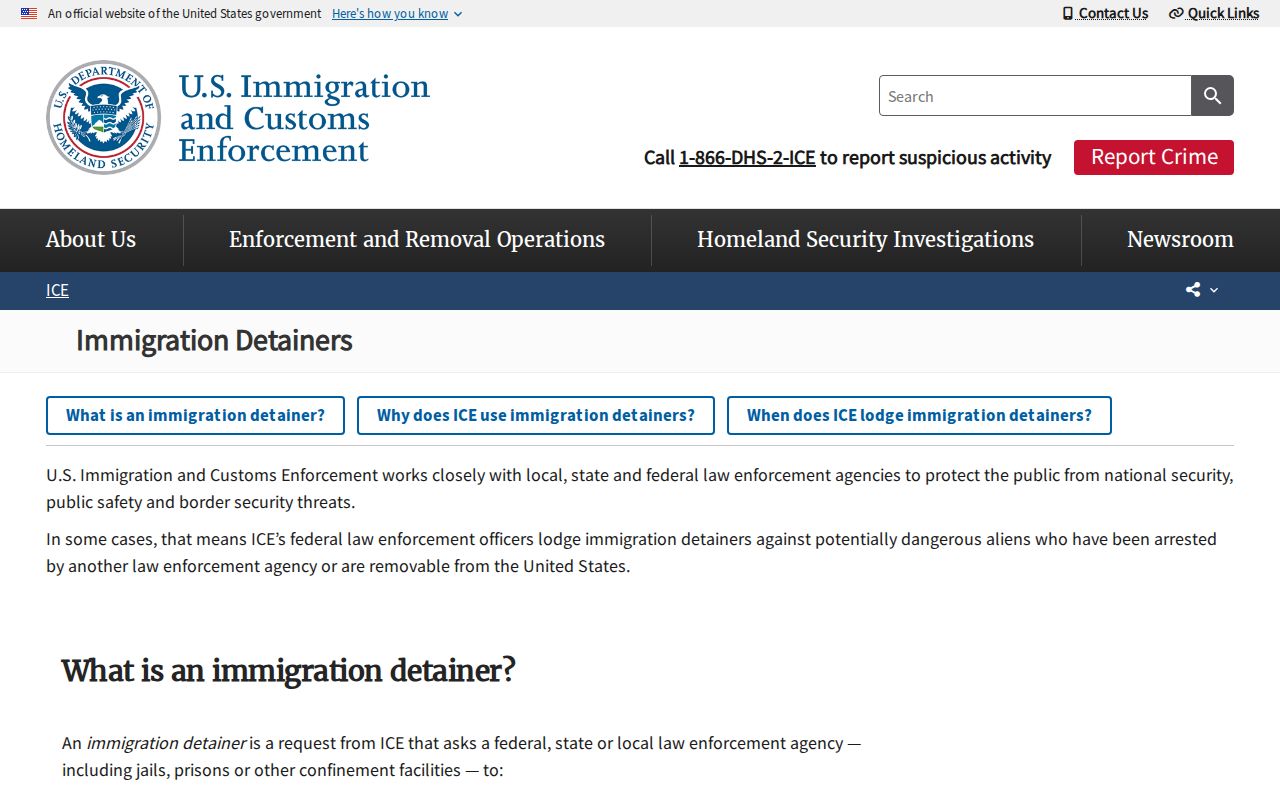
Ask the local custodian for the time ICE or another authority took custody. Then ask ICE for the next location or responsible office. If the person later leaves ODLS, preserve the last known agency status and date rather than filling the gap with a guess.
A detainer is not itself a criminal conviction. Immigration custody and criminal court proceedings are different systems. Describe the agency event without adding conclusions beyond the record.
ICE Release Record Request
When a public locator result cannot answer the historic question, define the event for an agency records request. Include full name, A-number, date of birth, country of birth, known detention facility, approximate custody dates, and relevant case number. Seek the nonexempt public portion of the custody history, actual release or transfer date, type of custody-ending action, and destination category if releasable.
Privacy, law-enforcement, immigration, and personal-safety rules may restrict disclosure. Request segregable portions and the legal basis for any withholding. A person or authorized representative may have access routes that differ from a third-party public request. Current ICE instructions should govern submission and identity verification.
Keep the regional and ICE requests separate. The regional custodian proves when its booking ended and who received the person. ICE proves what it recorded after the handoff. When the two timestamps align, they form a strong custody chain.
After ICE Detainee Release
An ICE release to the community may include reporting, check-in, monitoring, bond, or other case-specific conditions. Do not infer the terms from the word “released.” Obtain the agency notice or rely on counsel and the responsible ERO office for the person’s actual obligations. Immigration court proceedings may continue after detention ends.
| Post-ICE path | Source to confirm |
|---|---|
| Community release with conditions | ICE release document and ERO |
| Transfer to another ICE facility | ODLS and facility |
| Transfer to another authority | Receiving agency record |
| Removal | ICE case record or authorized source |
SC VINE is useful for participating county, SCDC, and SCDPPPS events, but it is not the ICE locator. BOP is also the wrong source for ordinary immigration detention. Use each system only for the custody it controls.
Lee ICE Verification Chain
Begin with the last known custodian. If that was the regional jail, get its release destination. If that was ICE, search ODLS and contact the responsible ERO office. If a criminal court order is relevant, read it as legal context rather than an exact movement log. If counsel is involved, case-specific confirmation may be the most direct path.
The Lee County release search overview distinguishes local, SCDC, federal prison, and immigration records. This prevents a missing regional roster card from being called an ICE release and prevents a missing ODLS result from being called community return.
A careful final statement identifies the event and source: the regional center transferred the person to ICE on a recorded date, ICE listed the person at a stated location on a stated date, or ICE produced a release record. Anything broader requires another direct record.
ICE Locator Identity Checks
Identity matching is central to an ODLS search. The A-number route combines that identifier with country of birth. The biographical route depends on exact name, birth information, and country details. Name order, multiple surnames, spelling, and date errors can affect a result. Try only documented forms and record which identifiers were used. Do not treat a near match as the same person.
The locator may display a detention facility or responsible office rather than a complete history. Call the listed contact and give the A-number when available. Ask for the present public status, whether a transfer changed the responsible office, and the correct route for a former-custody record. The Detention Reporting and Information Line can help when no office is shown or when the public result needs routing.
ODLS’s possible recent-release coverage does not establish a fixed sixty-day public archive for every record. Data protections, transfer timing, removal, and identifier issues can change visibility. Preserve the exact screen wording and search date. For proof of a past handoff from Sumter-Lee, pair the local release entry with the first ICE custody record. For proof that ICE later relinquished custody, obtain the ICE event or authorized case document rather than relying on disappearance from ODLS.
Public Record Search
Sponsored Results